
So you’re craving warm, gooey cinnamon rolls in the morning but absolutely do not want to wake up at sunrise and start kneading dough? Same. That’s exactly why these easy sourdough cinnamon rolls deserve a permanent spot in your weekend baking rotation.
You mix the dough the night before, let your sourdough starter do its slow, flavorful magic overnight, then roll, fill, slice, and bake the next morning. The result? Soft, fluffy rolls with buttery cinnamon filling and that gorgeous tangy flavor that makes sourdough so special. Basically, breakfast handles itself while you sleep. Love that for us.
Why This Recipe is Awesome?
First, these cinnamon rolls taste seriously bakery-worthy without requiring bakery-level skills. The sourdough starter adds a subtle tang that balances the sweet cinnamon filling, so every bite tastes rich without becoming sugar overload.
The overnight method also makes mornings ridiculously easier. You do the main work in the evening, let the dough ferment while you sleep, and wake up to dough that’s ready for the final steps.
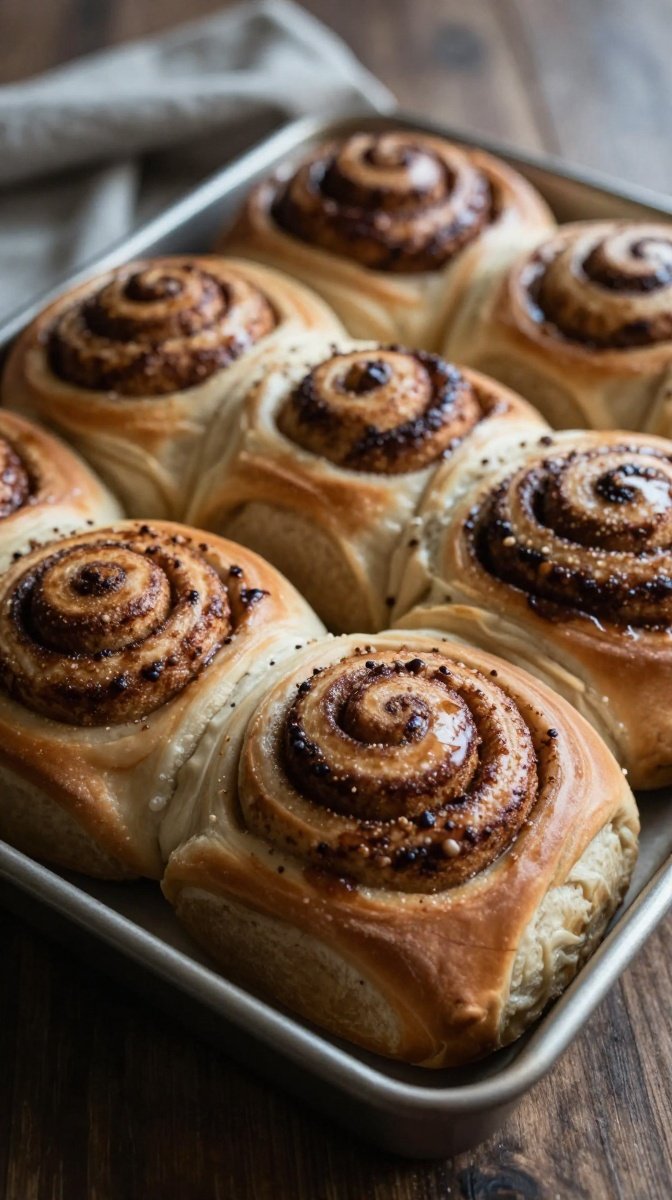
And the texture? Soft, tender, fluffy, and wonderfully gooey in the middle. Add a creamy glaze while the rolls are still warm, and suddenly your kitchen smells like you’ve been secretly training for a baking competition.
Another bonus: this recipe gives you a great way to use your sourdough starter. No need to stare sadly at that jar in your fridge wondering what to do with it. Your starter has a job now.
Ingredients You’ll Need
For the Dough
- 1 cup active sourdough starter – Use starter that’s bubbly and active for the best rise.
- 1 cup warm milk – Keep it warm, not hot. Nobody wants to cook the starter before it gets to work.
- 1 large egg – Adds richness and helps create a soft texture.
- 1/4 cup melted unsalted butter – Butter makes everything better. This isn’t up for debate.
- 1/4 cup granulated sugar – Just enough sweetness for the dough.
- 1 teaspoon salt – Balances the sweetness and brings out the flavor.
- 3 to 3 1/2 cups all-purpose flour – Start with less and add more only if the dough needs it.
For the Cinnamon Filling
- 1/2 cup softened unsalted butter – Soft enough to spread easily.
- 3/4 cup brown sugar – Brown sugar gives the filling that rich, caramel-like flavor.
- 2 tablespoons ground cinnamon – Because we’re making cinnamon rolls, not shy little bread spirals.
For the Creamy Glaze
- 4 ounces cream cheese, softened – The secret to that classic cinnamon-roll frosting.
- 2 tablespoons softened butter – Keeps the glaze silky.
- 1 cup powdered sugar – Sweet, smooth, and absolutely necessary.
- 1–2 tablespoons milk – Add gradually until you reach your favorite consistency.
- 1/2 teaspoon vanilla extract – A tiny amount adds a lovely bakery-style flavor.
Step-by-Step Instructions
1. Mix the Dough
Add the active sourdough starter, warm milk, egg, melted butter, sugar, and salt to a large mixing bowl. Stir everything until it looks evenly combined.
Add about 3 cups of flour and mix until a soft dough forms. If the dough feels extremely sticky, add more flour one tablespoon at a time.
Don’t dump in a mountain of flour just because the dough feels sticky. Sourdough dough often starts out softer than expected.
2. Knead Until Smooth
Turn the dough onto a lightly floured surface and knead it for about 5–8 minutes. You can also use a stand mixer with a dough hook if you prefer letting the machine do the heavy lifting.
The dough should feel soft and slightly tacky but shouldn’t cling aggressively to your hands. Resist the urge to make it stiff.
Soft dough usually gives you softer cinnamon rolls. That’s the texture we’re chasing.
3. Let the Dough Rise Overnight
Place the dough into a lightly greased bowl and cover it tightly. Leave it at room temperature overnight, ideally for about 8–12 hours.
Your sourdough starter will slowly ferment the dough while you sleep. The dough should look noticeably puffier by morning.
Room temperature affects fermentation, so use the dough’s appearance as your guide rather than blindly following the clock. If your kitchen runs cold, the dough may need more time.
4. Roll Out the Dough
In the morning, lightly flour your work surface and turn out the dough. Roll it into a rectangle about 1/4 inch thick.
Aim for a reasonably even rectangle, but don’t stress over perfect geometry. You’re making breakfast, not submitting blueprints to an architect.
If the dough resists rolling, let it rest for about 10 minutes and try again. That short rest gives the gluten time to relax.
5. Add the Cinnamon Filling
Spread the softened butter evenly over the dough, leaving a small border around the edges. Sprinkle the brown sugar and cinnamon evenly across the butter.
Press the cinnamon mixture gently into the butter so it stays in place while you roll. Don’t skimp on the corners because nobody wants a cinnamon roll with a sad, empty edge.
For an extra-rich filling, add a tiny pinch of salt. It sounds simple, but that little contrast makes the brown sugar taste even better.
6. Roll the Dough Into a Log
Start from one long side and roll the dough tightly into a log. Keep the pressure firm but gentle.
Try to maintain an even thickness as you roll. A loose roll can create gaps, while an overly tight roll can squeeze out the filling.
Once you reach the end, pinch the seam gently to secure it. Admire your little cinnamon log for approximately two seconds before moving on.
7. Slice the Rolls
Use a sharp knife or piece of unflavored dental floss to cut the log into about 10–12 rolls.
Floss works surprisingly well because it slices through the dough without squashing the spirals. If you use a knife, use a gentle sawing motion.
Place the rolls into a greased baking dish with a little space between them. They’ll expand as they proof.
8. Let Them Get Puffy
Cover the baking dish loosely and let the rolls rest until they look puffy and airy. Depending on your kitchen temperature and starter activity, this can take around 1–2 hours.
Don’t rush this stage. Proper proofing helps the rolls bake up light and fluffy instead of dense.
A good visual cue matters more than a stopwatch. When the rolls look soft and noticeably expanded, you’re ready.
9. Bake Until Golden
Heat your oven to 375°F (190°C). Bake the cinnamon rolls for about 22–28 minutes, or until the tops turn lightly golden and the centers cook through.
Keep an eye on them during the final few minutes. You want golden edges and soft centers, not crunchy cinnamon-roll hockey pucks.
If the tops brown too quickly, loosely cover the dish with foil for the remaining baking time.
10. Make the Cream Cheese Glaze
While the rolls bake, beat the cream cheese and butter until smooth. Add powdered sugar and vanilla, then gradually mix in milk until the glaze reaches your preferred consistency.
For a thick frosting, use less milk. For a pourable glaze, add a little more.
Honestly, this part deserves its own snack break. Just don’t eat all the frosting before the rolls come out.
11. Frost While They’re Warm
Let the cinnamon rolls cool for about 5–10 minutes, then spread the cream cheese glaze generously over the tops.
The warmth helps the frosting melt slightly into the swirls. That creates the gooey, glossy finish we’re after.
Serve them warm with coffee, tea, or a very large glass of milk. FYI, eating one straight from the baking dish absolutely counts as quality control.
Common Mistakes to Avoid
Using Weak Sourdough Starter
Your starter needs to look bubbly and active. If it hasn’t risen much after feeding, give it more time before making the dough.
A sluggish starter can leave you with dense rolls. And dense cinnamon rolls have no business ruining your weekend.
Adding Too Much Flour
This mistake happens constantly. A sticky dough can tempt you to keep adding flour until it feels easier to handle.
Don’t. Add flour gradually and stop once the dough feels soft and manageable. Too much flour can produce heavy, dry rolls.
Skipping the Overnight Fermentation
The overnight fermentation gives sourdough time to develop flavor and structure. Don’t try to speed everything up just because you’re impatient.
Good things come to those who let the dough hang out. Your sourdough starter has its own schedule, apparently.
Cutting Uneven Rolls
Try to cut your rolls evenly so they bake at roughly the same rate. If one roll looks enormous and another looks tiny, your baking dish may deliver some suspiciously uneven breakfast portions.
Use dental floss for especially clean cuts.
Overbaking
Don’t wait until every roll looks deeply brown. Pull them from the oven when the tops look lightly golden and the centers feel set.
Overbaking can turn soft cinnamon rolls dry. Nobody asked for cinnamon-flavored bread bricks.
Alternatives & Substitutions
Need to make a few swaps? No problem.
Milk: Use whole milk for richer rolls, or try 2% milk. You can also use unsweetened oat milk if you prefer a dairy-free option.
Butter: Use plant-based butter if needed. Choose a baking-friendly variety with a similar fat content for the best texture.
Flour: All-purpose flour works beautifully, but you can replace a small portion with bread flour for a slightly chewier texture.
Cream cheese frosting: Not a cream cheese person? Try a simple vanilla glaze made with powdered sugar, milk, and vanilla. IMO, both options taste fantastic.
Filling: Add chopped pecans or walnuts for crunch. You can also sprinkle a few mini chocolate chips over the cinnamon mixture if you’re feeling particularly dangerous.
Sugar: Brown sugar creates the richest filling, but light brown sugar works perfectly if that’s what you have.
FAQs
Can I prepare these cinnamon rolls more than one night ahead?
Absolutely. You can assemble the rolls, cover them tightly, and refrigerate them for a longer hold. Let them come closer to room temperature before baking so the dough can finish proofing properly.
Can I use sourdough discard?
You can use discard for flavor, but active starter works best for natural leavening. Discard lacks the same rising power as an active, bubbly starter.
If you use discard, you’ll generally need another leavening method to get fluffy rolls.
Why didn’t my cinnamon rolls rise?
Your starter may not have been active enough, or your kitchen may have been too cool. Sourdough also needs time, so avoid judging the dough too quickly.
Give it a warm, draft-free spot and watch for visible growth rather than relying only on the clock.
Can I make these without cream cheese frosting?
Of course! A simple vanilla glaze tastes delicious too. Mix powdered sugar with a splash of milk and vanilla until smooth.
You could even dust the warm rolls with powdered sugar and call it minimalist baking. Fancy name, zero extra effort.
How should I store leftover cinnamon rolls?
Store them in an airtight container at room temperature for about a day or refrigerate them for longer storage.
Warm individual rolls briefly before serving to bring back their soft texture. Add a tiny bit of fresh glaze if you want them to taste extra indulgent.
Can I freeze sourdough cinnamon rolls?
Yes. Freeze baked, cooled rolls without frosting for the best texture. Wrap them tightly, place them in a freezer-safe container, and thaw before reheating.
Add fresh frosting after warming them. Future-you will be extremely grateful.
How do I know when the dough has fermented enough?
Look for a dough that has visibly expanded, feels airy, and shows some bubbles. The exact timing depends on your starter and kitchen temperature.
Don’t obsess over a precise number of hours. Watch the dough, not just the clock.
Final Thoughts
These easy sourdough cinnamon rolls prove that impressive baking doesn’t need to turn your kitchen into a disaster zone. Mix the dough at night, let your starter work its magic while you sleep, then wake up and finish the job with buttery cinnamon filling and creamy frosting.
The hardest part? Waiting long enough before eating the first one.
So grab that sourdough starter, make the dough tonight, and give yourself the kind of breakfast that makes an ordinary morning feel ridiculously special. Now go impress someone—or just impress yourself. You’ve earned it! 🍥✨